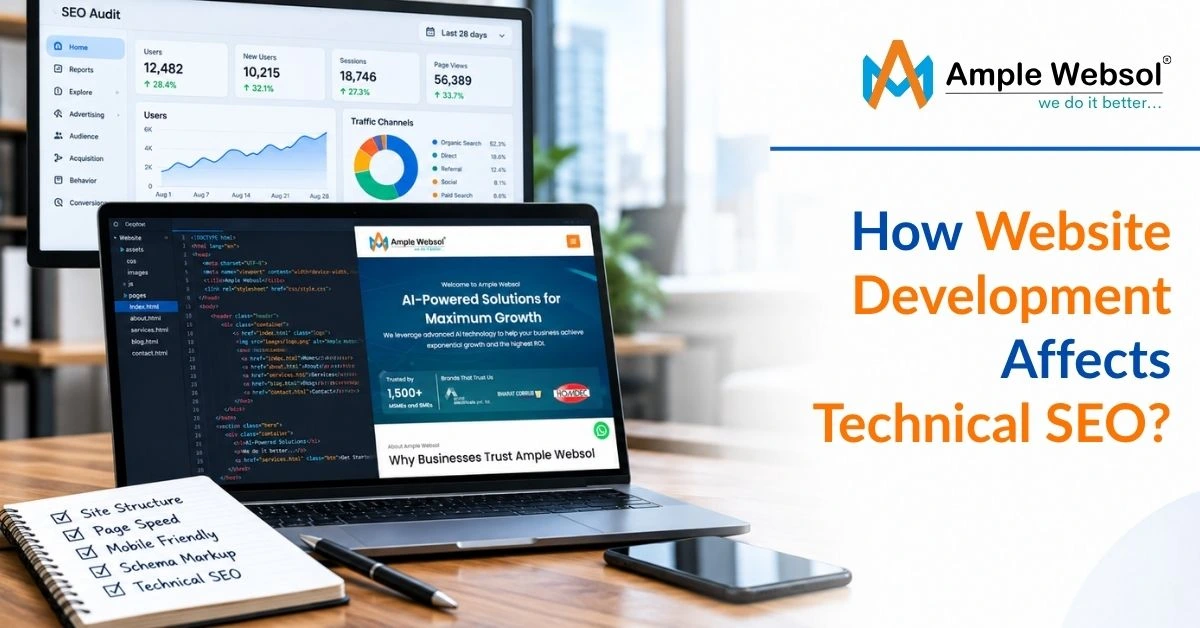
Website development and technical SEO work closely together. A well-developed website makes it easier for…

In today’s digital era, having a website is essential, but having one that converts visitors into customers is even more important. Effective website development focuses not just on design but on user experience, speed, trust, and SEO. In this guide, you’ll learn how to build a high-converting website step by step, helping you turn more visitors into engaged users, leads, or customers.
Table of Contents
hide
What is a High-Converting Website?
A high-converting website is one that encourages users to take desired actions — whether it’s filling out a form, signing up for a newsletter, or making a purchase. The conversion rate refers to the percentage of visitors who complete these actions. Good website development ensures that your website aligns with user expectations, making it easy and enjoyable to navigate while solving their problems.
Conversion is driven by design, content, speed, and trustworthiness. Without addressing these areas, even a beautifully designed website might fail to engage or retain visitors.
Define Your Website’s Purpose and Audience
A successful website starts with a clear understanding of who you are trying to reach and what actions you want them to take. Identify your target audience by creating user personas that describe their needs, behaviours, and challenges.
For instance, first-time visitors may want information and assurance, while returning customers are looking for deals or personalized services.
Key Actions:
- Create personas based on demographics and Behavior.
- Define conversion goals (contact form submissions, downloads, purchases).
- Map content to different stages of the user journey.
Defining these elements will make the website development process more focused and effective.
User Persons vs. Conversion Goals
| User Person | Needs | Best Content Type | Conversion Goal |
| First-time visitor | Information & trust-building | Blog posts, reviews | Newsletter signup |
| Returning user | Personalized offers | Discounts, demos | Product purchase |
| Mobile user | Fast access, simple navigation | Landing pages | Quick inquiry |
Defining your audience ensures your website content resonates and addresses their unique needs — setting the stage for higher conversions.
Design with User Experience (UX)
User experience plays a crucial role in how visitors interact with your website. Even if your site looks attractive, poor navigation or confusing layouts can drive users away.
Mobile responsiveness: More than half of user’s access websites through mobile devices, making responsive design essential.
Clear navigation: Menus should be intuitive and easy to explore.
Readability: Use fonts and spacing that improve comprehension.
Accessibility: Include alt text, headings, and contrast for users with disabilities.
Strategic keyword use: Integrate keywords like “website development” naturally in headings and descriptions.
A user-friendly website keeps visitors engaged, lowering bounce rates and increasing conversions.
Improve Website Speed and Performance
Website speed directly affects user satisfaction and search engine rankings. A slow-loading website leads to high bounce rates, whereas a fast website keeps visitors exploring your content.
- Test your website using tools like Google Page Speed Insights.
- Optimize images by compressing them without compromising quality.
- Enable browser caching to reduce load times.
- Minify code to ensure faster execution.
- Select a reliable hosting provider for uninterrupted service.
Performance improvements are a vital part of website development, helping your site stay competitive and user-friendly.
Craft Compelling Calls to Action (CTAs)
CTAs are prompts that encourage users to act. Without them, users may not know how to proceed, resulting in missed opportunities.
- Use a contrasting color to highlight buttons.
- Write benefit-driven text like “Start Your Free Trial” or “Download Now.”
- Place CTAs in high-traffic areas like headers, sidebars, and at the end of content.
Clear CTAs guide users through the conversion process, improving interaction and engagement.
Effective vs. Weak CTAs
| Effective CTA | Weak CTA |
| “Start Your Free Trial Now” | “Click here” |
| “Download the Guide Instantly” | “Submit” |
| “Get Personalized Advice Today” | “Learn more” |
Well-crafted CTAs reduce hesitation and guide users through the conversion funnel.
Use Trust Signals to Build Credibility
Trust plays a significant role in conversion. Users need to feel confident before sharing their details or making a purchase.
- Customer testimonials and reviews
- Security certifications like SSL
- Transparent privacy policies
- Case studies and awards
Including trust elements within your website development ensures users feel safe and are more likely to act.
A/B Testing and Analytics for Continuous Improvement
Don’t let your website’s performance become static over time. A/B testing your pages will allow you to compare two versions of a page to see benefits.
- You can test your headlines, CTA sequencing, the number of fields on forms, or images in A/B tests.
- You will want to consider key metrics such as bounce rates, conversions, session times and any other measurement related to your website’s goals.
- You can use tools like Google Analytics, Hotjar, or Crazy Egg to measure and analyse user Behavior and heatmaps.
Ready to boost your conversions and grow your business? Contact us today and let’s build a website that delivers real results!
SEO Best Practices for Conversions
SEO guides you to the right traffic – users who are looking for a solution you provide.
Keyword research: Understand user intention and factors affecting keywords naturally.
On-page optimization: Keywords should be present in meta titles, descriptions, headings, and the body of content.
Internal linking: linking all relevant pages for users to engage with your site.
Schema markup: Use structured data, like FAQ, review, and product for the search appearance.
Strong SEO ensures that your website development strategy reaches the right people at the right time.
Enhancing Engagement with Content Strategy
Content is a strong means for building relationships and driving conversions.
- Use downloadable assets, like guides or checklists
- Use videos and tutorials to simplify complicated subject matter
- Personalize content based on user Behavior and preferences
- Consistently develop blog listings to remain relevant and positioned as an authority
Content not only generates traffic but cultivates leads based on ongoing value.
Frequently Asked Questions
A high-converting website combines user-friendly design, fast performance, clear messaging, and trust signals to guide visitors toward completing desired actions.
You can improve your conversion rate by optimizing site speed, designing for mobile, crafting strategic CTAs, and using analytics to test and refine user interactions.
A mobile-responsive design ensures users can easily access and interact with your site from any device, reducing frustration and increasing engagement.
Yes! SEO helps attract users who are searching for solutions, driving more qualified traffic and improving the likelihood of conversions.
Trust signals like customer reviews, certifications, and clear policies build credibility and reassure visitors, making them more likely to act.
Reviewing your strategy every quarter, or after significant changes, ensures your website stays aligned with user Behavior and market trends.
Conclusion
Building a high-converting website requires more than just good design — it’s about aligning your site with user expectations, optimizing performance, and integrating SEO and trust signals. Effective website development focuses on creating a seamless experience that attracts visitors and encourages them to act. By defining your audience, improving UX, implementing speed optimizations, and continuously testing, you can create a website that not only looks great but also delivers measurable results, helping you grow your business online.

Related Posts