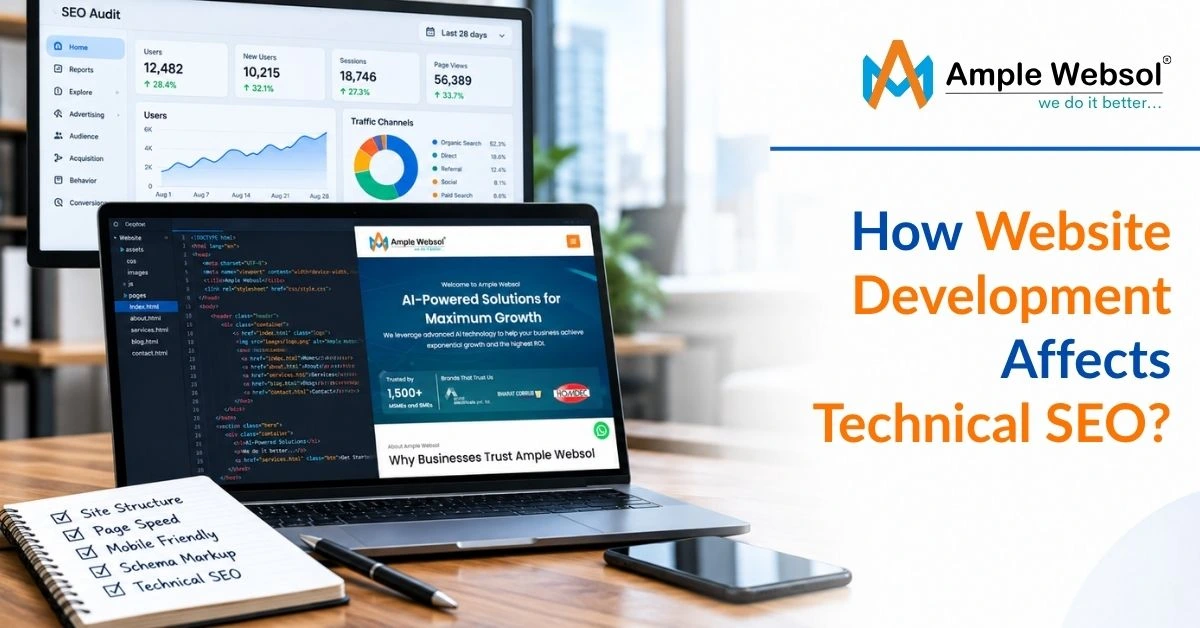
Website development and technical SEO work closely together. A well-developed website makes it easier for…

In the digital space, owning an online store is one of many challenges you will face, but now you also must bring visitors and convert them into paying customers. In terms of this, e-commerce SEO is crucial; search engine optimization can greatly improve your visibility, attract interested buyers, and ultimately improve sales for businesses just like yours.
At Ample, we help e-commerce firms implement proven SEO techniques and strategies which provide significant results.
What you need to know about SEO for E-commerce
E-commerce SEO: what is it?
E-commerce SEO is optimizing your online store to rank better on search engines like Google. It differs from traditional SEO in that e-commerce SEO focuses specifically on the individual product and category pages, as well as content that relates to the store to increase sales and revenue.
Why SEO matters for e-commerce businesses.
The purpose of SEO is to attract the right kind of traffic, not just traffic. According to studies, over 70% of online shopping journeys start at a search engine. When you are optimizing your e-commerce store, you are increasing the likelihood of reaching a customer who is actively looking to buy. At Ample, we help e-commerce businesses use SEO to attract more traffic and conversions.
On-Page SEO Best Practices for E-Commerce
Product Page Optimizations
Unique Product Descriptions: Never copy a product description from the manufacturer. Unique and educational content will increase user engagement and be viewed positively for SEO
Keyword Research & Placement: When writing a title, product description, and heading, use keywords that are relevant to buyer intent.
Meaningful Images & Alt Text: Ensure the images look solid quality-wise and include the alt tags.
Structured Data: Use schema for rich snippets that will display product ratings or prices under search results.
Category Page Optimizations
Feature Clear Hierarchy & Navigation: Allow visitors to easily browse and find products.
Internal Linking: Link product pages to relevant categories. This will also make it easier to crawl through pages.
Keyword Targeting: Keywords for categories should be broader to relate to products within the category.
Title tag & Meta descriptions
- Make your titles engaging; including primary keywords is a must.
- Meta descriptions should provide a compelling synopsis of the page to enhance click-through rates (CTR).
- URL Structure & Site Architecture
- Short URL pages should also be descriptive and include keywords.
- Should maintain a hierarchical structure for categories and subcategories.
Ensure your site is mobile-friendly, and having a positive user experience will enhance rankings.
Technical SEO for E-Commerce
Website Speed and Performance
Slow websites cost sales. Use image compression, caching, and content delivery networks (CDNs) to improve performance.
Mobile Optimization
As mobile-first indexing continues, your website must be responsive and fast-loading on all devices. ample allows e-commerce stores to provide a mobile experience that is seamless.
XML Sitemaps and Robots.txt
Publish an XML sitemap in your Google Search Console and publish a robots.txt correctly so search engines can crawl your website.
HTTPS and Security
SSL certificates encrypt transactions and help with SEO rankings. Customers prefer secure websites, and that can help with conversions.
Off-Page SEO for E Commerce
Building Quality Backlinks
Link building is acquiring links from high-quality websites. To earn links, you can use guest blogging, partnerships, and influencer collaborations to build your e-commerce business.
Social Media Signals
Social shares are indirect signals that can impact SEO. Being active on social media can drive traffic to your e-commerce site and engage customers while also enhancing perceived brand authority.
Customer Reviews & User-Generated (UGC)
Reviews affect how you rank in search and build trust with potential customers. You should encourage customers to leave reviews. Having lots of review content is also good content with natural keywords.
Need help with internal linking for SEO? Contact us to get expert guidance on boosting your rankings.
E-Commerce SEO with Content Marketing
Blog Posts and Guides
Informational blogs and product guides can assist you in creating content that leverages long-tail target keywords. Content marketing allows your brand to position itself as an authority and generate organic traffic to your site.
Video Content and Tutorials
Video content can boost engagement and your conversion rates. Optimize the title, description, and transcript of the video to ease any possible confusion on the original intentions of the content.
Frequently Asked Questions and Knowledge Base Pages
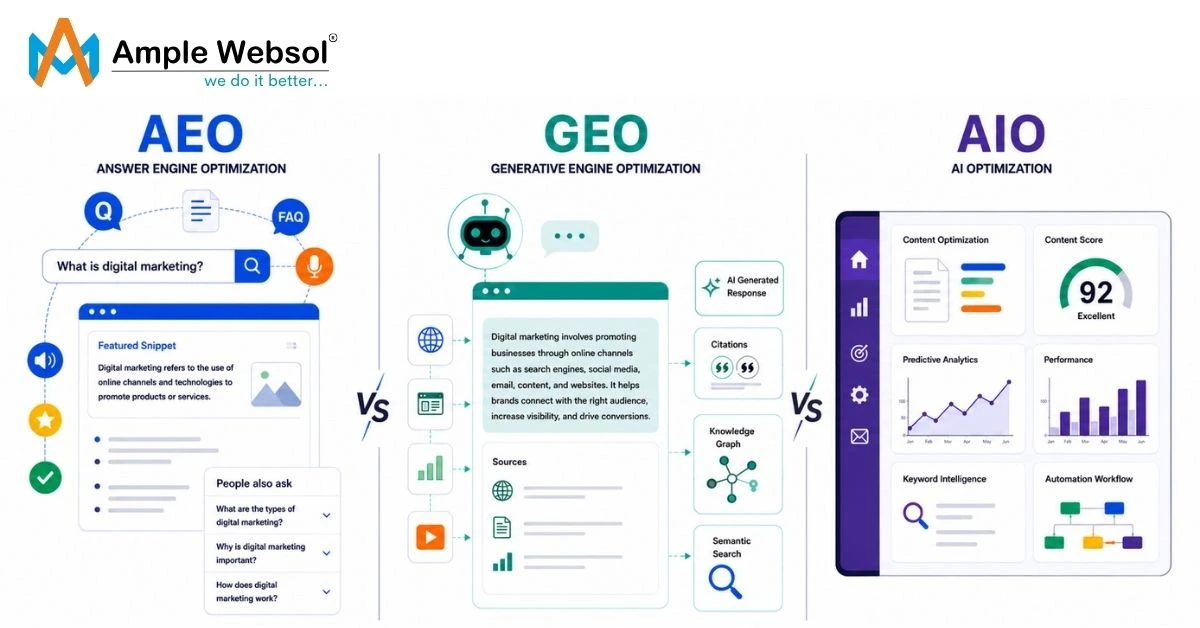
This could help to improve SEO overall, but it also helps with Answer Engine Optimization (AEO), allowing your store to appear in voice search results.
Conversion Rate Optimization (CRO) & SEO
SEO is more than traffic…it’s turning traffic into buyers! SEO & CRO work together to:
- A/B test product pages and call to actions
- Optimize landing pages for faster conversions
- Utilize analytics to track sales from SEO traffic
Ample uses SEO and CRO best practices to ensure your traffic isn’t just traffic that has no value, but traffic that converts into measurable revenue.
SEO Tracking and Measuring E-Commerce SEO Success
Essential SEO Metrics to Monitor
Use important metrics like organic traffic, bounce rate, conversion rate, and ranking positions as a way of judging the effectiveness of your e-commerce SEO efforts.
SEO Tools for Performance Tracking
You’ll want to use tools like Google Analytics, Google Search Console, or something similar like SEMrush or Ahrefs to measure and improve your e-commerce SEO strategy.
Frequently Asked Questions
E-commerce SEO is the optimization of online stores so search engines will direct buyers to your store and ultimately increase sales.
Feature unique product descriptions, quality images, relevant keywords, and structured data.
Include higher-level keywords, clear, intuitive navigation, and internal linking.
Technical factors improve speed, mobile experience, crawlability, and security.
High-quality backlinks improve authority, and reviews increase trust while creating keyword-rich content
Create blogs, articles, and videos focused on longer-tailed keywords to drive organic traffic
Answer Engine Optimization enables users to have their content appear in voice search results, increasing visibility.
Review metrics like traffic, rankings, conversions, and user engagement.
Conclusion
E-commerce SEO is an important part of improving online visibility, reaching the right people, and generating sales. With on-page, technical, off-page, and content marketing strategies in place, your online store will be on track for sustainable growth.
At Ample, we pride ourselves in developing e-commerce SEO strategies specific to your e-commerce business for improved rankings, improved traffic, and ultimately more sales for your e-commerce store. Start optimizing your online store today to convert clicks into loyal customers.

Related Posts