One of the first questions businesses ask after starting SEO Services is, “How long does…

In today’s website development and website design, a secure website is the foundation of a successful online presence. Cyber-attacks are more advanced than ever, and users expect fast, safe experiences. If your site is slow, not using HTTPS, or vulnerable to attacks, you risk losing customers, rankings, and revenue. In this guide, you’ll learn how to build secure websites with the latest technologies, follow website security best practices, and protect your business from modern threats—without needing to be a cybersecurity expert.
Why Website Security Matters
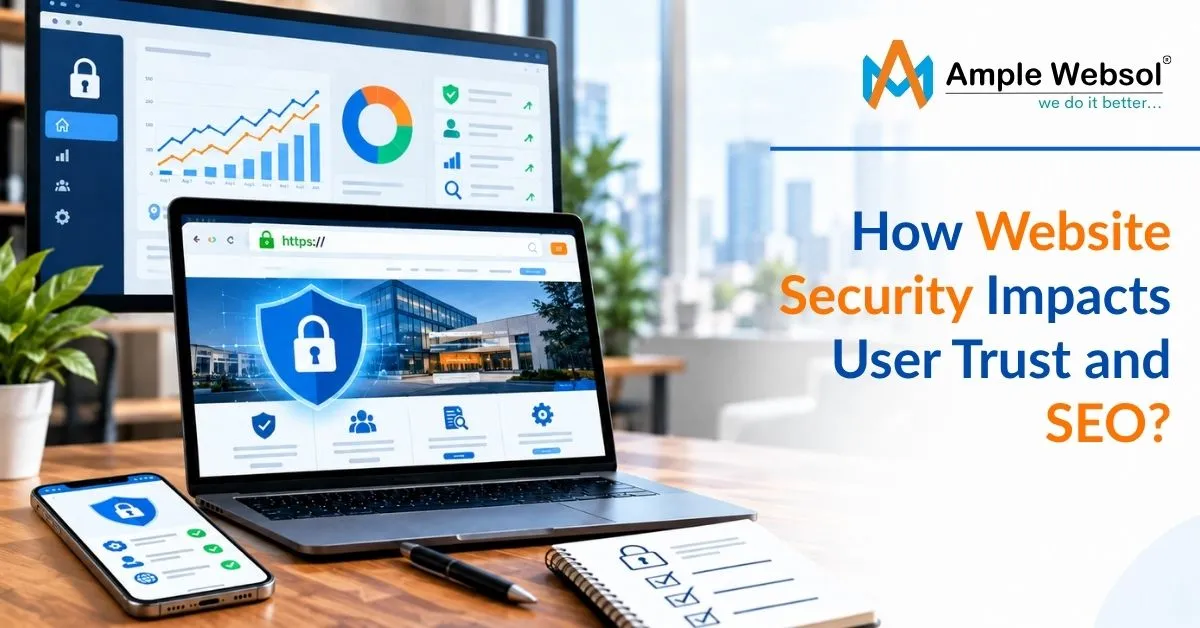
In professional website development and website design, website security directly influences user trust, SEO rankings, and your brand reputation.
Security, Trust & User Experience
A hacked or compromised site can lead to:
- Stolen user data (passwords, payment details, emails)
- Blacklisting by search engines
- Loss of trust and credibility
- Drop in conversions and sales
Users are more likely to stay, browse, and buy when they see signs of website security like HTTPS, trust badges, and smooth, error-free browsing.
How Security Impacts SEO
Search engines, especially Google, prefer secure websites. Some key factors:
- HTTPS is a confirmed ranking signal.
- Insecure pages can trigger browser warnings like “Not Secure”.
- Slow or compromised sites hurt Core Web Vitals and page experience.
So improving website security is also a way to boost your SEO performance and organic traffic.
Latest Technologies for Building Secure Websites
In modern website development and website design, using the latest security technologies helps you stay one step ahead of hackers.
HTTPS & SSL/TLS Certificates
HTTPS is the standard for any serious website today. It encrypts data between the user’s browser and your server.
- Install an SSL/TLS certificate to activate HTTPS.
- Use reputable certificate authorities (CA).
- Redirect all HTTP traffic to HTTPS.
Zero-Trust Architecture
Traditional security assumes everything inside your network is “safe.” Zero-trust security assumes the opposite: trust nothing, verify everything.
- Every request is authenticated and authorized.
- Great for businesses with remote teams and cloud-based apps.
- Reduces the impact of internal and external threats.
AI-Powered Threat Detection
AI and machine learning are transforming website security:
- Detect suspicious patterns and brute-force attacks in real time.
- Automatically block IPs, bots, and unusual behavior.
- Integrate with your web application firewall or hosting platform.
Web Application Firewalls (WAF) & API Protection
A Web Application Firewall (WAF) acts as a shield between your website and the internet:
- Filters malicious traffic (SQL injection, XSS, bots).
- Helps mitigate DDoS attacks.
- Protects both websites and APIs.
If your site uses APIs or microservices, pair a WAF with a secure API gateway to protect data and internal services.
Best Practices for Secure Web Development
In scalable website development and website design, following secure coding and deployment practices is the backbone of a safe website.
Secure Authentication Systems
Weak logins are one of the easiest ways in for attackers. Strengthen authentication with:
- Strong passwords and enforced password policies
- Multi-Factor Authentication (MFA) or 2FA
- Passwordless login using email links or biometrics
- Using OAuth 2.0 / OpenID Connect for social logins
This protects your admin panel, user accounts, and backend systems.
Secure Coding Standards (OWASP Top 10)
Your code should be written with security by design:
- Avoid SQL injection by using prepared statements.
- Sanitize and validate all user input to prevent XSS attacks.
- Implement proper session management and secure cookies.
- Limit file uploads and scan files for malware.
Following frameworks like the OWASP Top 10 helps developers avoid the most common vulnerabilities.
Database & Cloud Security
Your database website security is just as important as your front-end:
- Use encryption at rest and in transit.
- Restrict database access with strong credentials and IP whitelisting.
- Regularly back up data and test restore processes.
On cloud platforms (AWS, Azure, GCP):
- Use built-in security tools and managed databases.
- Apply least-privilege policies with IAM roles.
- Enable logging and monitoring for suspicious activity.
Want expert help securing your website with the latest technology?
Contact us now and let our professionals guide you.
Implementing Security Testing
In professional website development and website design, security testing is not a one-time task—it’s an ongoing process.
Types of Security Testing
Use multiple layers of testing for better protection:
- Vulnerability scanning – Automatic tools scan for known weaknesses.
- Penetration testing (Pentest) – Ethical hackers simulate real attacks.
- Code review & security audit – Manual checks for insecure logic or design.
Popular Security Tools
You can strengthen your website security using tools like:
- OWASP ZAP
- Burp Suite
- Snyk (for dependencies and open-source libraries)
- Qualys or similar vulnerability scanners
- Cloudflare or similar WAF providers
Schedule these tests regularly, especially after major updates or new feature releases.
Before vs After Security Optimization
In data-driven website development and website design, analysing “before and after” results helps show how powerful security improvements can be.
| Element | Before Security Upgrade | After Security Upgrade |
| Website Speed | Slower due to outdated hosting & no optimization | Faster with optimized HTTPS, caching & CDN |
| Attack Surface | High – no WAF, weak passwords, outdated plugins | Reduced – WAF enabled, MFA, secure coding, updated software |
| SEO Ranking | Poor rankings, browser “Not Secure” warnings | Improved rankings, HTTPS padlock, better user signals |
| User Trust | Low – users hesitant to enter payment details | High – visible security badges, smooth checkout experience |
| Downtime Risk | Frequent outages from attacks or misconfigurations | Lower downtime with monitoring, backups & DDoS protection |
This type of transformation is possible for any business that invests in secure website development and proactive maintenance.
Future Trends in Website Security
In forward-thinking website development and website design, staying updated with future security trends is vital for long-term protection.
Quantum-Safe Encryption
As quantum computing advances, traditional encryption methods may become easier to break. Future-proof sites will:
- Explore post-quantum cryptography algorithms.
- Work with providers who plan quantum-safe updates.
Blockchain-Based Identity & Authentication
Blockchain technology can be used to:
- Verify digital identities.
- Reduce fraud and identity theft.
- Secure decentralized applications (dApps) and Web3 projects.
DevSecOps & Automation
DevSecOps integrates security into every stage of the development cycle:
- Automated security checks in CI/CD pipelines.
- Instant alerts for vulnerabilities in code or dependencies.
- Faster patching and more reliable releases.
The future of website security is automated, intelligent, and deeply integrated into every part of your digital product.
Frequently Asked Questions
To make your website more secure, start by enabling HTTPS with an SSL certificate, using strong passwords and multi-factor authentication, updating software and plugins regularly, installing a web application firewall (WAF), and running regular security scans and backups.
Some of the most common website security threats include SQL injection, cross-site scripting (XSS), brute-force login attacks, malware infections, and phishing. These attacks exploit weak passwords, outdated software, or insecure code.
Yes. Website security affects SEO. Google prefers HTTPS websites, and insecure or compromised sites can lose visibility, receive browser warnings, and experience higher bounce rates—all of which hurt your search engine ranking.
HTTPS (Hypertext Transfer Protocol Secure) encrypts the communication between your browser and the server using SSL/TLS. It prevents attackers from intercepting or modifying data, protects user privacy, and boosts trust and SEO.
You can use tools like SSL Labs to check your SSL configuration, OWASP ZAP or Burp Suite for vulnerability scanning, Snyk to check dependencies, and your hosting or CDN provider’s WAF and security analytics for real-time monitoring.
Conclusion
In modern website development and website design, security must be treated as a priority—not an afterthought. The digital world is evolving rapidly, and so are cyber threats. By adopting HTTPS encryption, secure authentication systems, AI-powered threat detection, WAF integration, secure coding practices, and continuous security testing, businesses can build websites that are not only fast and user-friendly but also protected against advanced attacks.
A secure website builds trust, boosts SEO rankings, protects your brand reputation, and ensures long-term online success. Whether you’re developing a personal website, eCommerce store, or large-scale web application, following the latest website security technologies and best practices will help you stay ahead of cyber risks and maintain a safe digital environment for users.

Related Posts